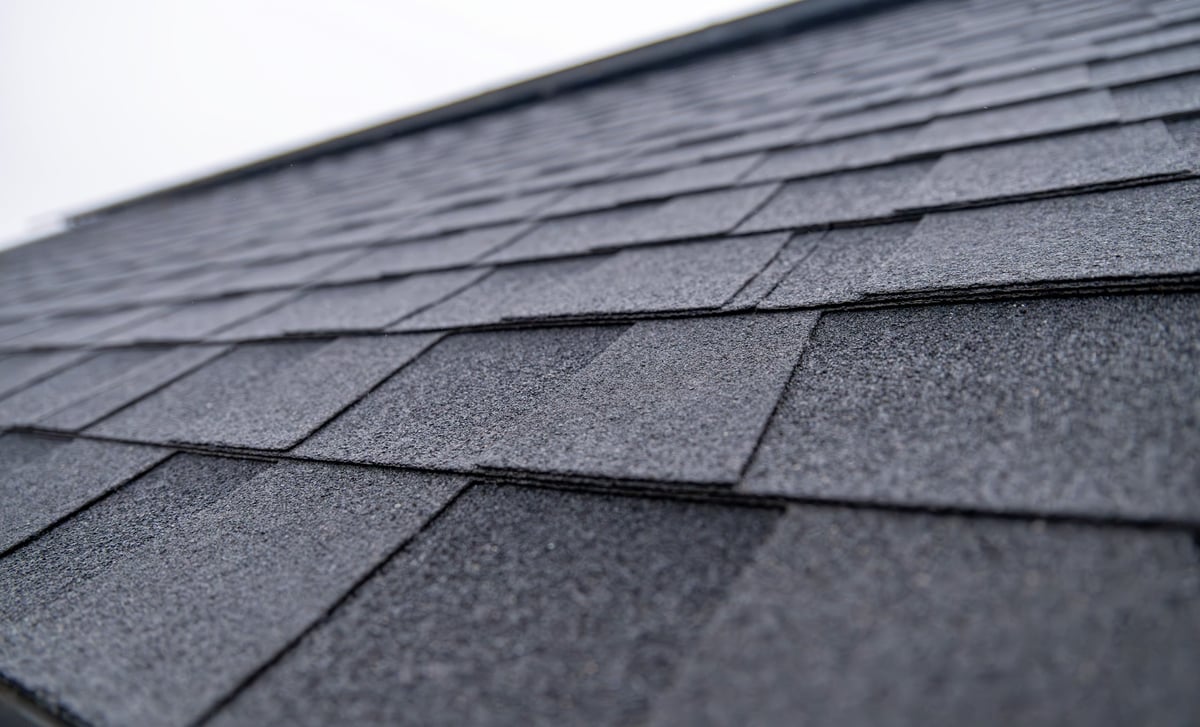
 EPDM
Single-ply rubber
Best for: large, simple roofs
A seamless-looking black rubber sheet, glued or ballasted. Few penetrations means fewer seams to inspect, and it copes well with expansion.
Watch: UV ageing and adhesive seams over time.
A demo template for a specialist contractor: membrane systems, slope and taper plans, and the drainage details that decide whether a low roof lasts ten years or thirty.
Read-only preview — nothing is submitted or stored.
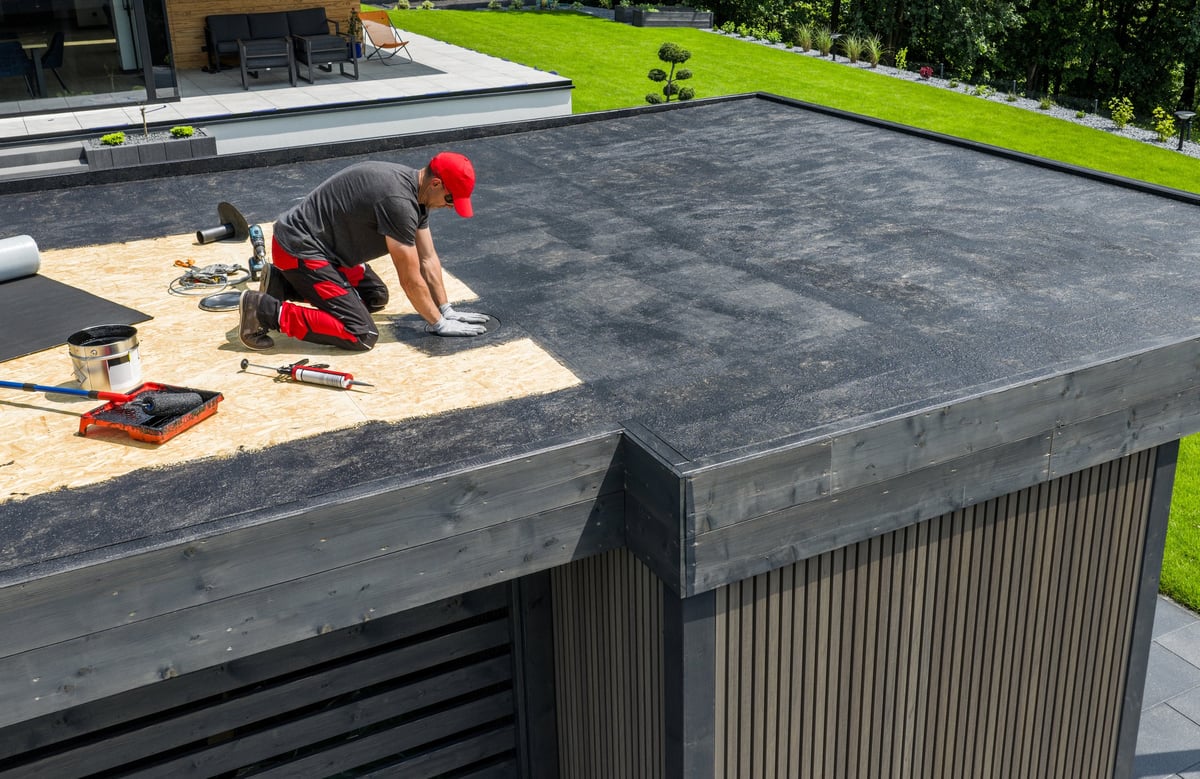
Minimum slope plus a corner drain, shown from above. Illustrative only.
Service overview
Every service below is a demonstrative description written for this template — not an offer from a real contractor.
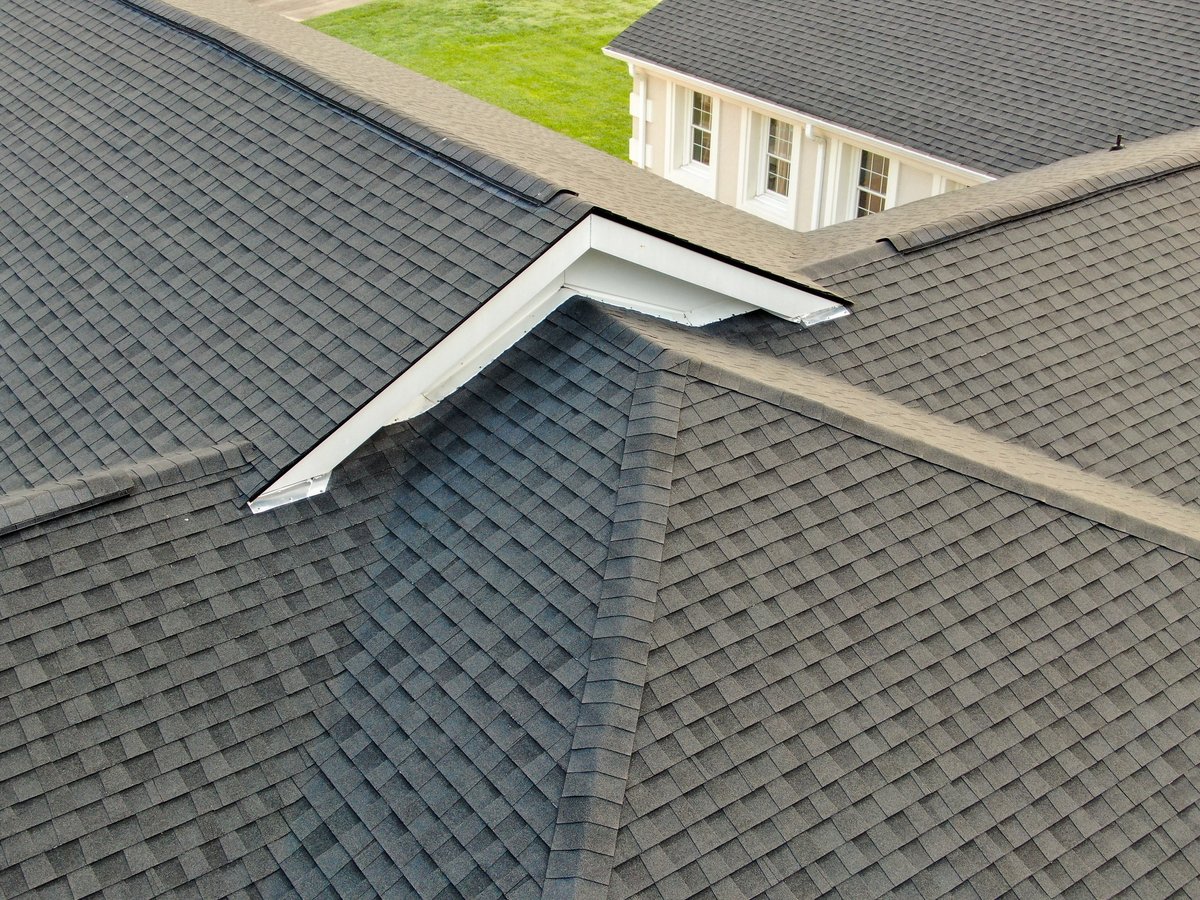
EPDM or TPO over new insulation and a tapered substrate, with the drainage plan worked out before a sheet is laid.
Service details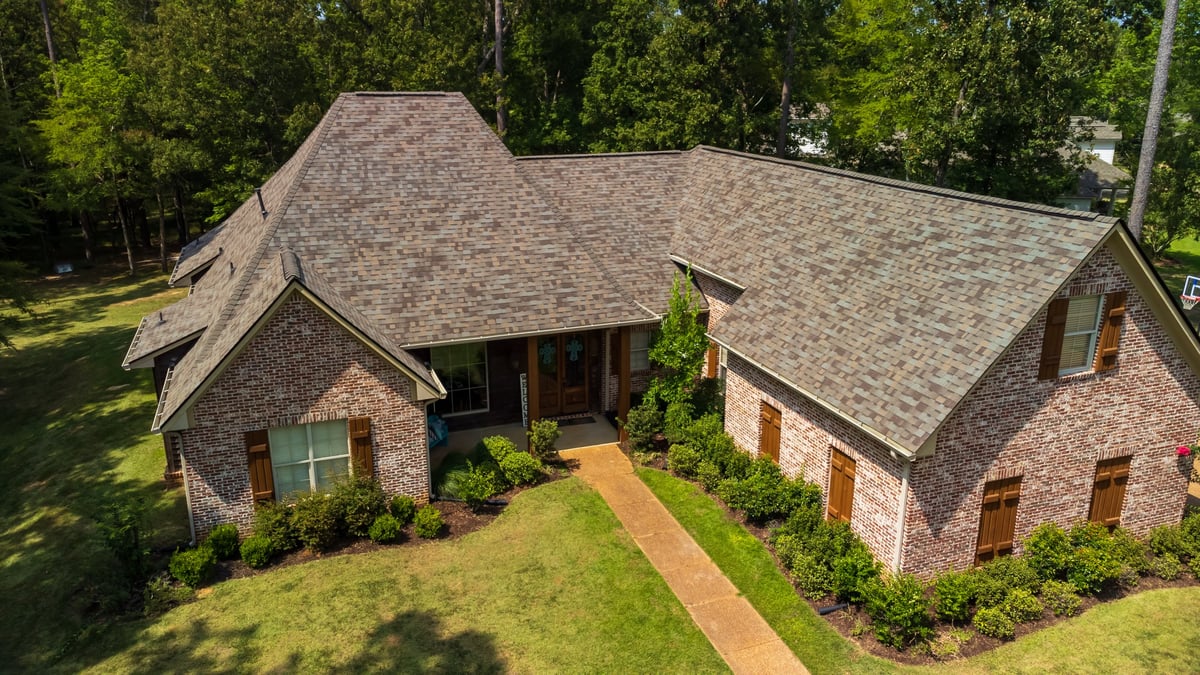
Tear-off of an ageing flat roof, deck inspection and repair, then a bonded new system with a written layer build-up.
Service details
Moisture mapping, seam checks and ponding review to find where water actually enters — not just where it stains.
Service details
Scuppers, internal drains, overflow paths and crickets that keep water moving off a low roof after heavy rain.
Service detailsDrainage by design
Shingles shed water by gravity on a steep pitch. A low-slope roof has to be planned: slope, drains, overflows and crickets all work together. This diagram shows the four parts a template project plan would cover.
A fall of at least 1:80 is typical for membrane systems — enough to move water before it ponds.
A corner or internal drain sized for the roof area, with a strainer that stays clear.
A secondary path so a blocked primary drain never lets water back up into the building.
Tapered panels that steer water around openings, skylights and parapets.
Material use cases
The choice is rarely about price alone. These are the situations where each system tends to make sense on a low-slope home.
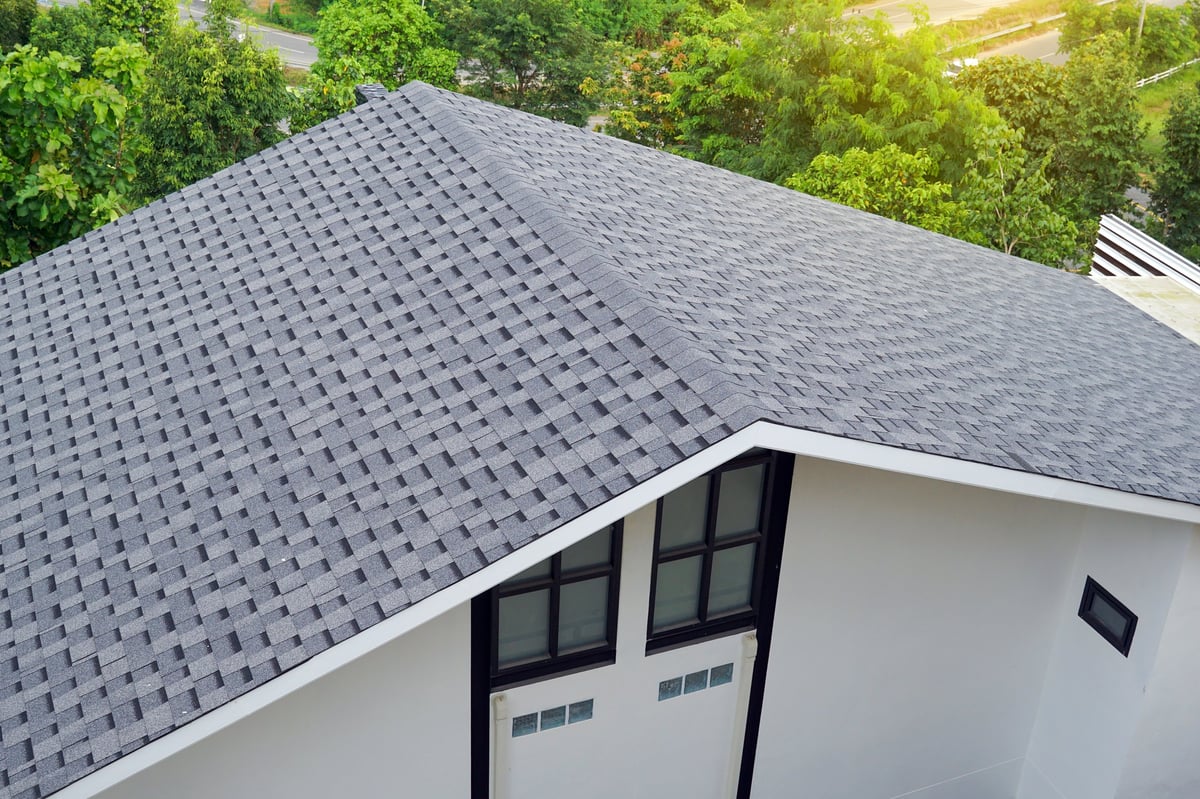
EPDMBest for: large, simple roofs
A seamless-looking black rubber sheet, glued or ballasted. Few penetrations means fewer seams to inspect, and it copes well with expansion.
Watch: UV ageing and adhesive seams over time.
 TPO
Best for: energy-focused retrofits
A light-reflective membrane whose seams are hot-air welded into a monolithic layer. Cooler underfoot and easy to trace for leaks.
Watch: correct welding temperature — every seam matters.
 MOD-BIT
Best for: small, detailed roofs
Torch- or cold-applied rolls with a mineral cap sheet. Suits compact footprints, tight parapets and lots of awkward detailing.
Watch: open-flame work needs strict site control.
Sample project cards
These cards are written examples for the template. No property, client or figure here describes an actual project.
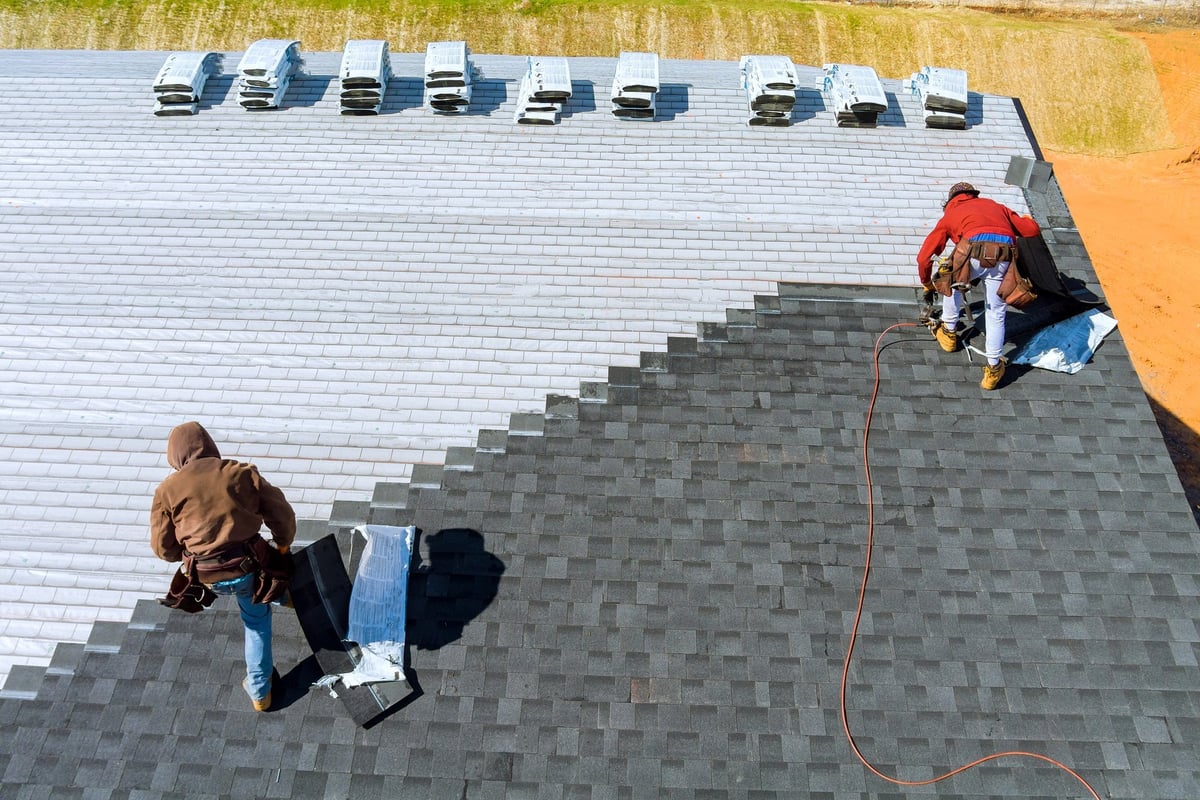 Illustrative sample
Tear-off of a 22-year-old felt system, new tapered insulation and TPO with two new overflows.
 Illustrative sample
A flat rear extension tied into the existing roof, with crickets around a rooflight and a hidden scupper.
Illustrative sampleDiagnosis of a persistent leak, re-graded deck section and a new strainer with an overflow path.
FAQs
General template copy, written to show how a roofing site can answer real visitor questions before they contact anyone.
How services are structuredGenerally anything below about a 3:12 pitch (roughly 14 degrees). These roofs need continuous membrane systems rather than overlapping shingles, and drainage has to be designed rather than left to gravity.
A visual check twice a year — before and after the rainy season — plus a closer look at any seam, drain or flashing after a major storm. Most problems are cheaper to fix as a detail than as a full replacement.
Often, yes — if the deck and insulation are dry. A patch over a wet assembly tends to hide the problem rather than solve it, so diagnosis comes first. This template's services page walks through how that decision is framed.
Water that stays on the roof for more than 48 hours after rain. It adds weight, ages seams faster and finds any weak point. Improving slope, adding drains or crickets is usually the fix.
Broadly 15–30 years depending on the system, installation quality and maintenance. The estimate preview shows how a template could present options without quoting real work.
No. Every page here is a fictional template. The estimate page is a read-only preview with example answers — it never submits or stores anything.
Estimate intake preview
The template ships an estimate page built around the questions a low-slope roofing project actually needs: roof area, current covering, drainage and access. The field shown here is a frozen example — it cannot be typed in, submitted or saved.
Open the full estimate previewDemo only — no data leaves this page.
Step 2 of 4 — Roof details
Read-only example. The real template form is intentionally disabled — it does not submit or store data.
The full service breakdown and what each one covers.
Illustrative scenarios showing how project work is presented.
See the roofing questions a real intake would ask.
Four steps, example answers, and a disabled submit button — exactly how a low-slope roofing intake could be structured.